

Why I Went Looking
I did not go to Poland as a tourist.
I went because a cousin I had never met said, “Come.”
I did something both practical and deeply personal. I spit into a tube, mailed off my DNA, and upgraded my Ancestry account because I felt something stirring inside me. Where did I come from?
At the time, my family tree held about fifty people, all American. Names. Dates. A few familiar stories. What I didn’t know was that within weeks, a cousin I’d never met would message me on WhatsApp and invite me into a family I didn’t yet understand.
By the time I left Poland, our shared ancestry tree would grow to more than two hundred people. Knowing that very few spoke English didn’t deter me. We shared blood. We would figure the rest out.
Arriving in Kraków
How is this place so beautiful, so preserved?
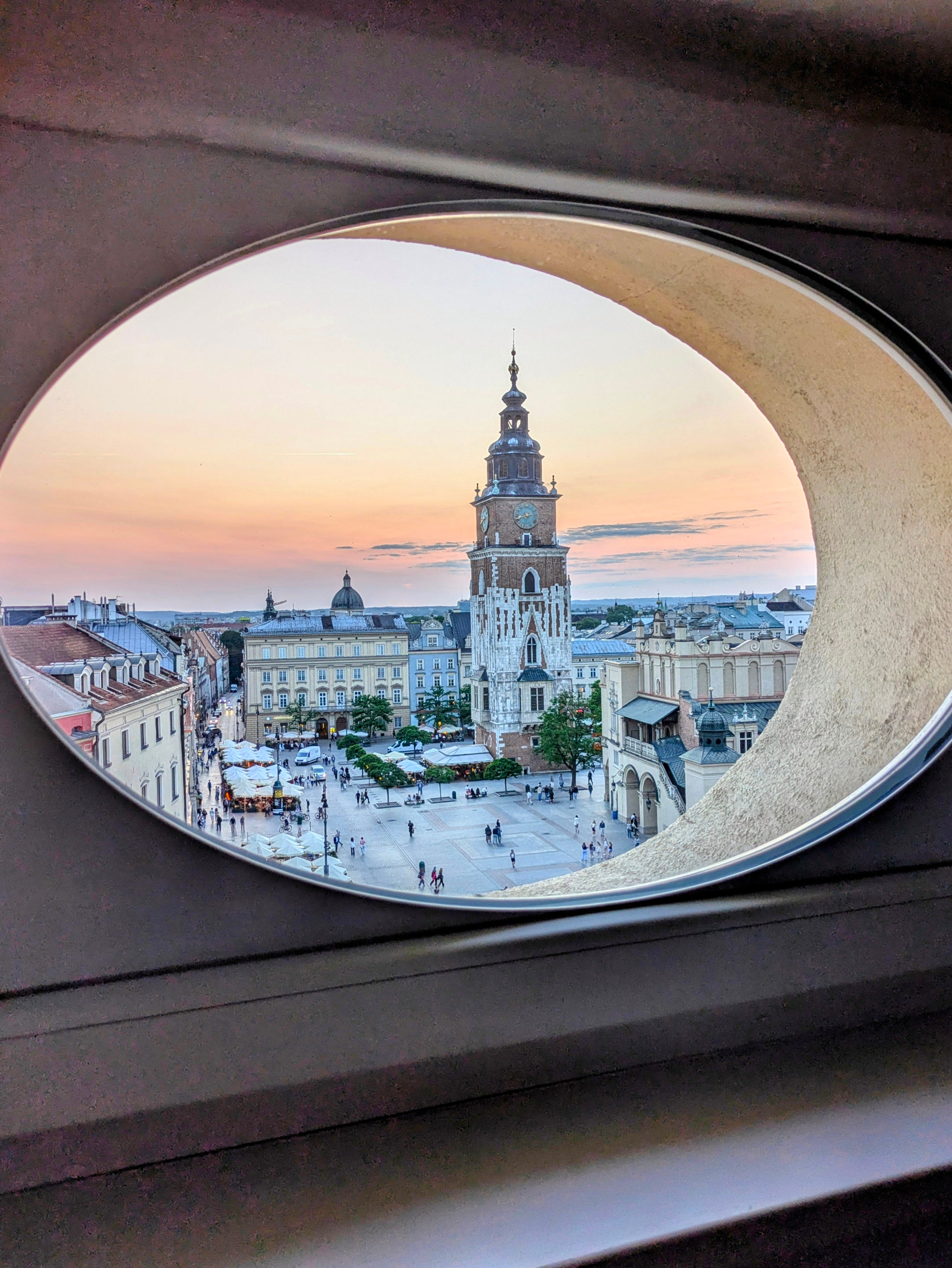
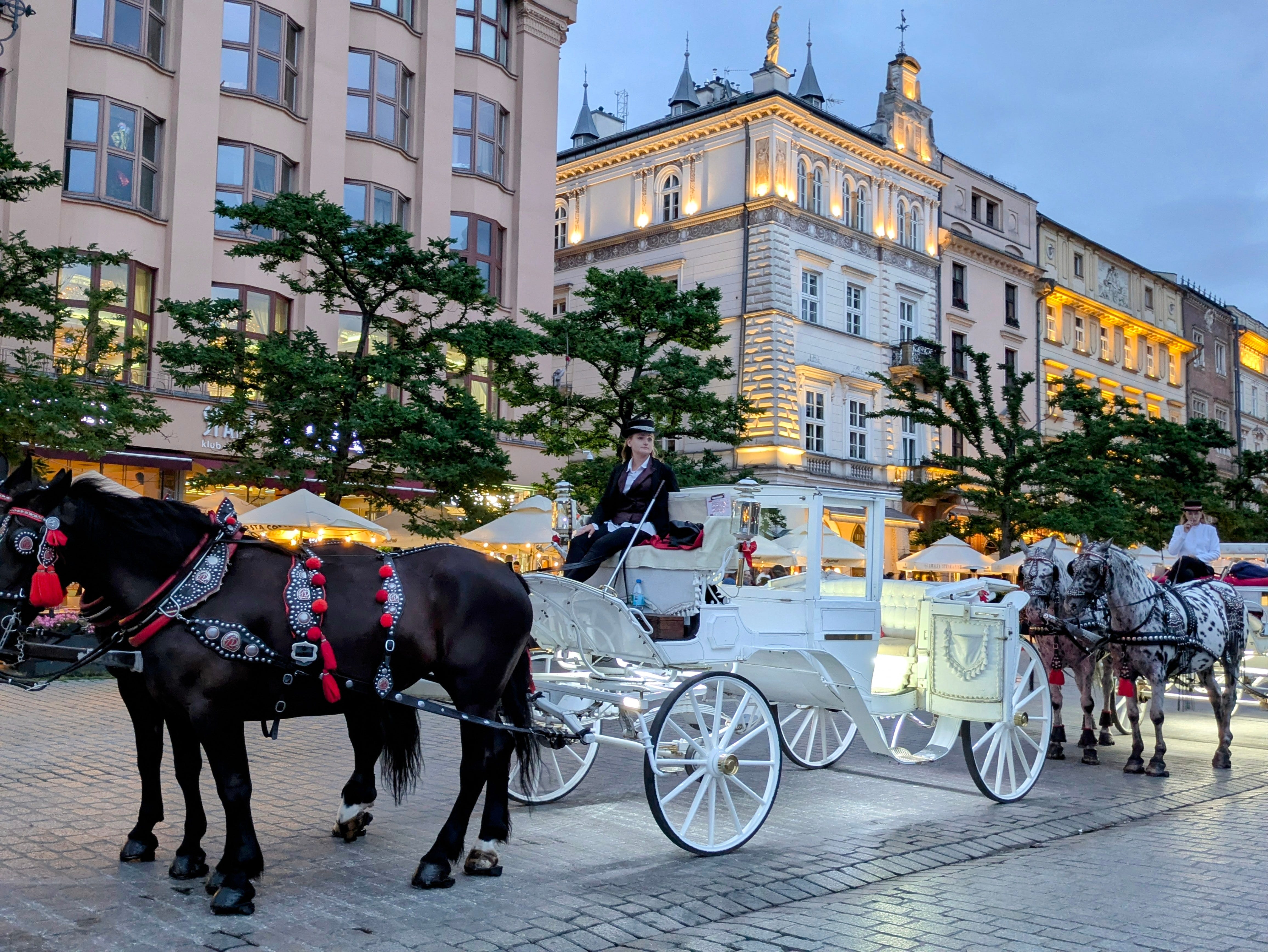
The town square was surrounded by pastel-colored palaces converted into shops and hotels. In the center stood a towering brick structure, its green-and-gold clocks facing all four directions. Flower boxes overflowed beside umbrella-covered cafés. Horse-drawn carriages waited along the edges. The sky was pinky gold, sunset hour. There was live music. The square was packed with people, some dancing in the streets.
It was as if the city itself had decided to dress up. So many flowers.
Across the square, I noticed a bakery: Nakielny’s Coffee & Cakes, and I stopped cold. Nakielny was my grandmother’s surname. Back at the hotel, I tried to learn more from their website, emailed them, and said I was there on an ancestry trip. They never wrote back. Still, seeing my grandmother’s name on a sign felt like a hint.
The First Reunion
I took a train from Kraków to Bochnia for a traditional Polish family meal.
By then, the cousins had already exchanged a few messages and photos. Enough to feel familiar, but nothing that could prepare me for what it would feel like to be in the same room together. They met me at the train and brought me into a home filled with people who had been waiting for me.
They had gone all out.
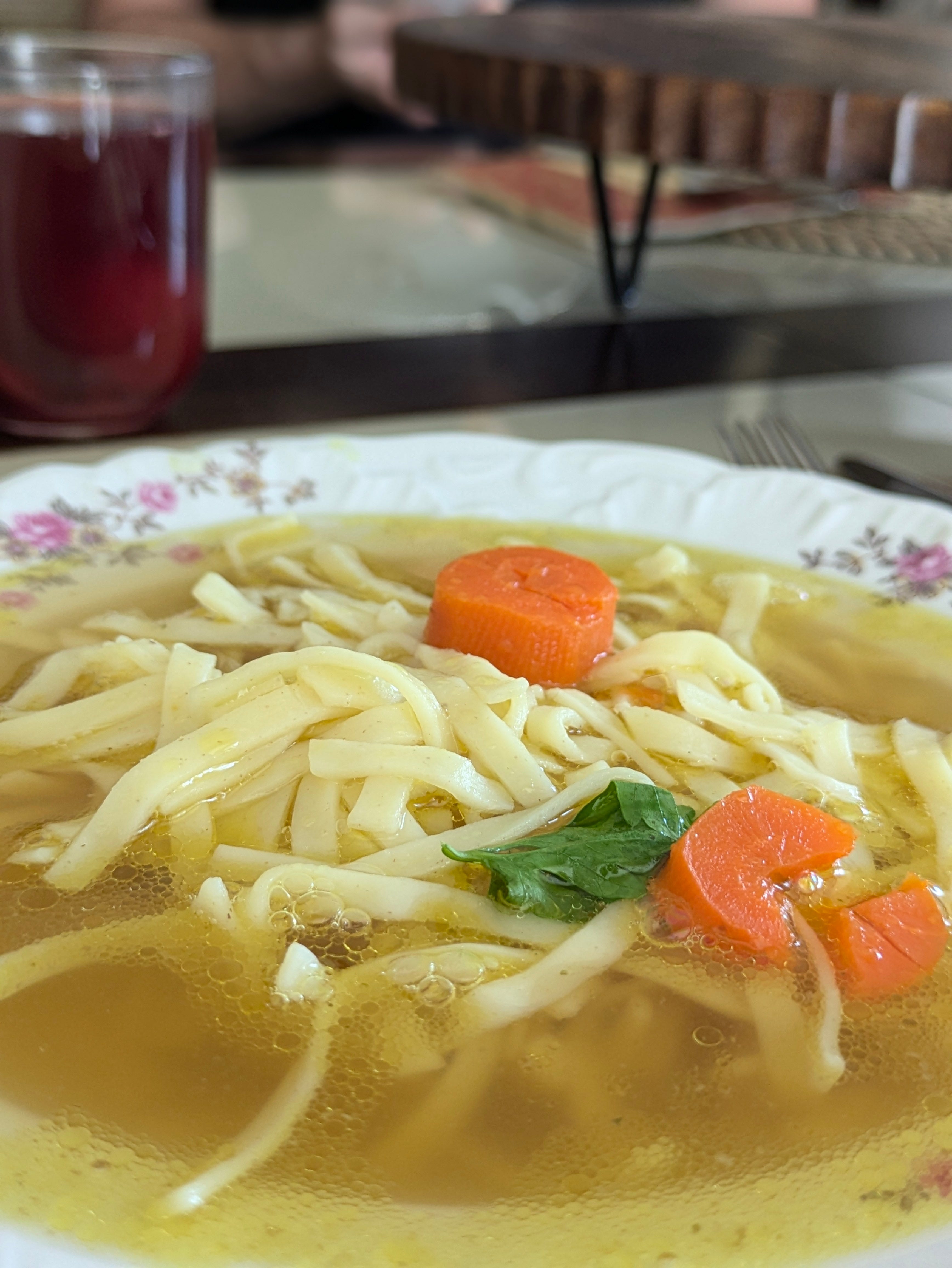
The table was set with china, plates and bowls adorned with pink roses. After initial hugs, the feast began. Plates kept appearing: homemade soup, fried cutlets, roast pork, boiled potatoes, salads, pierogies, cold meats, sausages, beets, fruit, cakes, cherry juice. Bowls were refilled before they were empty. There was no rushing.
Conversation moved easily with Google Translate and the English spoken by the younger generation. Phones were passed back and forth. Someone would type. Someone else would read. Curiosity flowed in all directions.
At one point, photos were brought out. Pictures my grandmother had mailed to them. They held them carefully, comparing faces, pointing, nodding. I could see it. The same features in all of us. They were my people, and they were not upset that we had not been in touch before. I told them that my grandmother never told us.
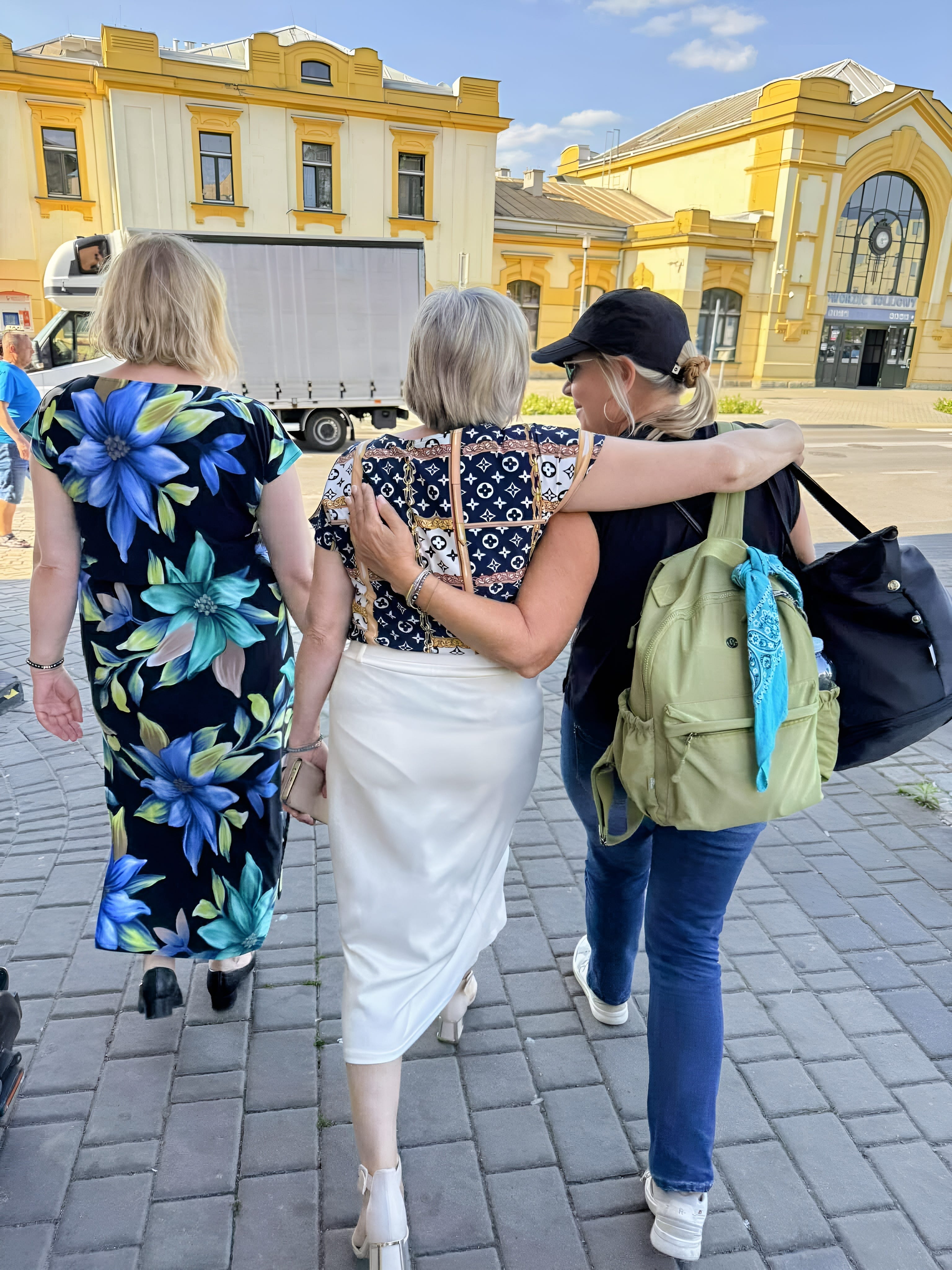
The love in that room was real. Open. Welcoming. By the time I left Bochnia, arms around each other as we walked to the station, it hit me. This trip was no longer about research or ancestry charts. It was about reunion.
Going Deeper
I traveled on to Świdnica next. A four hour train ride and a hotel booked for five nights.
Here, the gatherings were larger. There was a christening ceremony, followed by a celebration at a restaurant. More food.
Świdnica was where I met Paweł, a cousin, a historian, a business owner, father and husband. His sense of Polish patriotism was immediately clear. He and his mother, who looked so much like me she could have been my twin, took time off work to be my guides.
It mattered to them that I understood where I was. That I understood this place.
They showed me their town and its history. We walked. We took day trips. Parks, streets, buildings where they had grown up. Paweł works as a caretaker of trees for the town’s parks, and he spoke about nature with the same care he spoke about family and history. Proud. Protective.
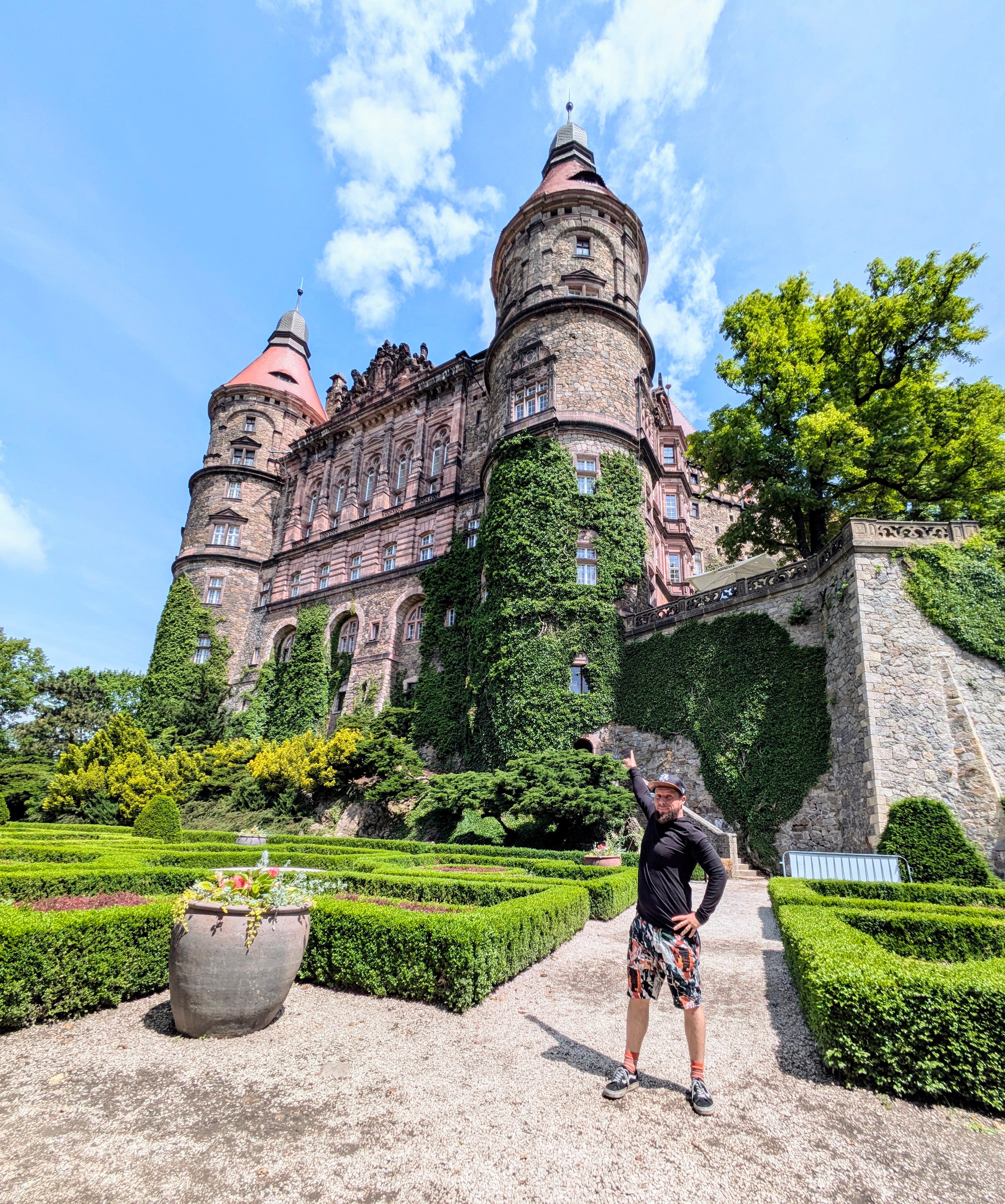
Outside Świdnica stands Książ Castle. Beautiful on the surface, heavy underneath. During World War II, it was taken over by the German military and became part of the underground Project Riese complex, tunnels built by Nazi prisoners. We walked through those tunnels together. The weight of what had happened there was impossible to ignore.
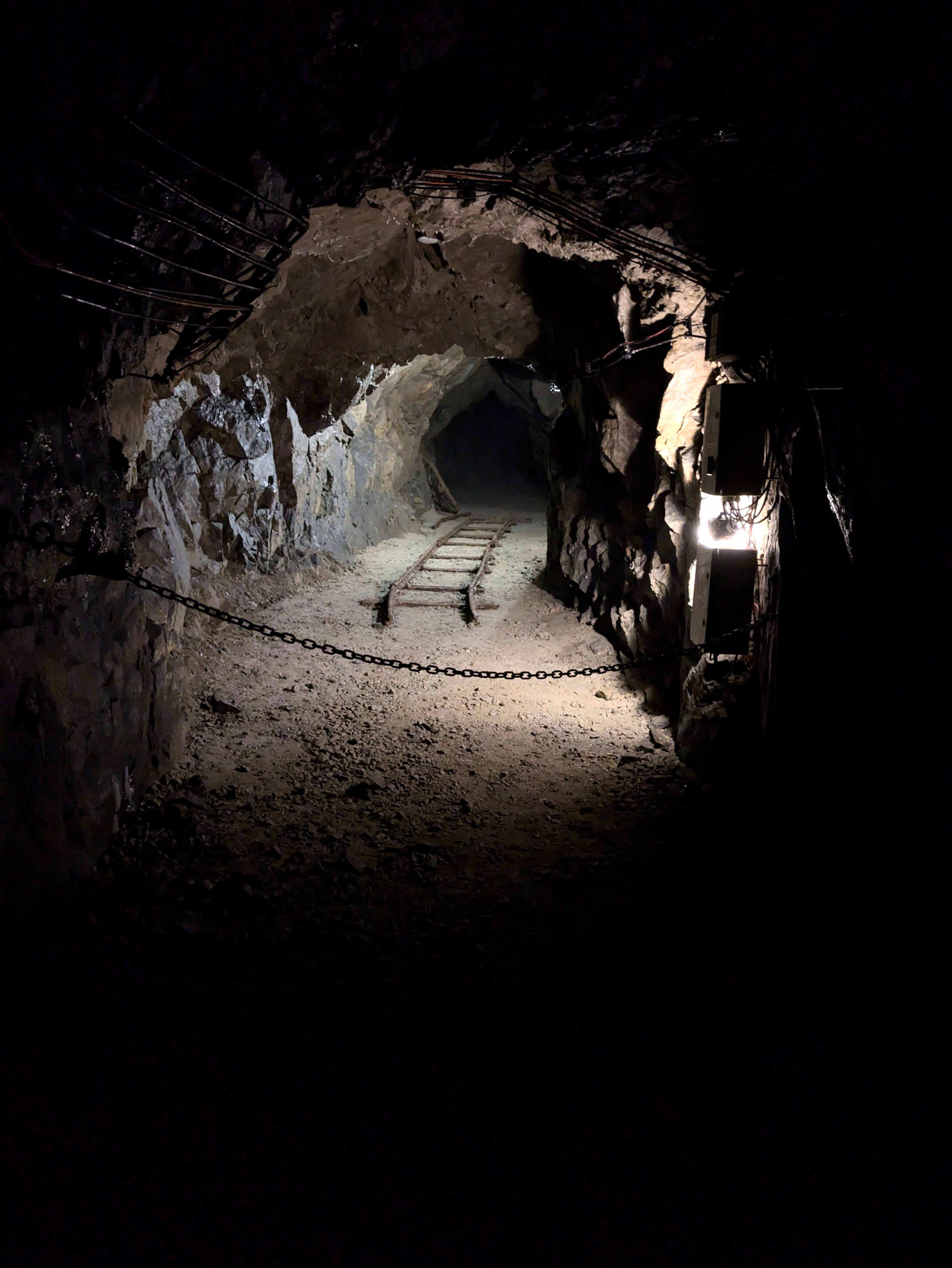
History here was physical. Built into the ground. Built into my understanding.
The Rainy Day
Rain changed our plans. Instead of touring, we stayed in Paweł’s mother’s home. Coffee was poured. Cakes were set out. Shoeboxes appeared.
Inside were old photographs, documents, and letters. Applications submitted to the U.S. government by my grandmother and aunts, trying to bring our Polish relatives to America. The applications had been denied. Bank statements from my family’s restaurant were attached, proof they could support them. Letters written in my grandmother’s handwriting lay quietly on the table.
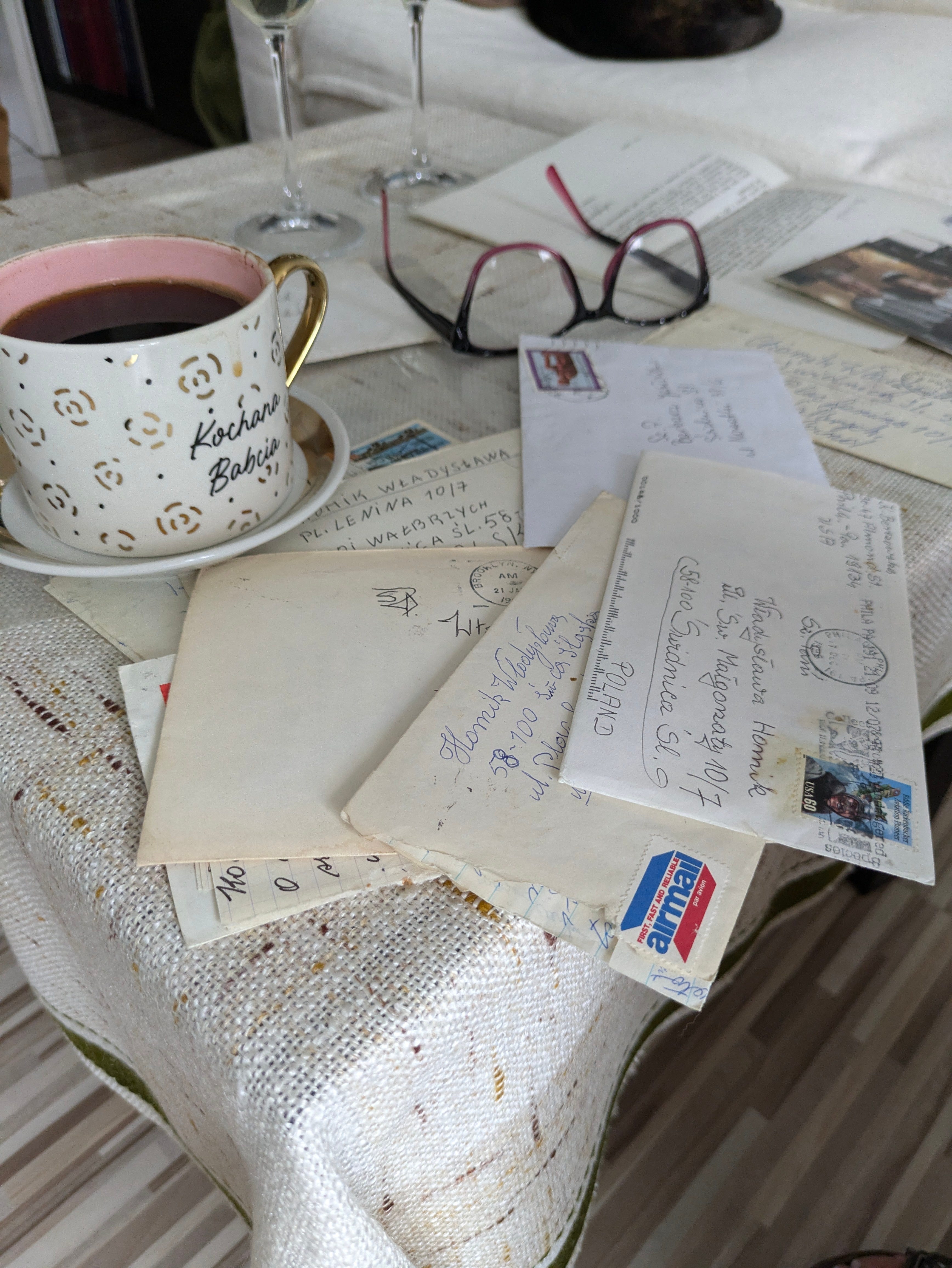
This was the day everything cracked open.
Why had my grandmother never told us?
Our family had lived through things I knew nothing about. Hardship. Fear. Silence under Soviet rule. A time when speaking the wrong language or writing the wrong letters could carry serious consequences. Silence was a form of survival.
Sitting there, holding her handwriting in my hands, I began to understand that maybe this wasn’t about secrecy. It was protection.
She had built a life in America. A safe one. Seeing those letters changed the way I understood her. Built into the heart of her were the same qualities that have defined the Polish people for generations. A refusal to give in to invaders, including the Nazis, and the courage to organize underground networks at great risk. The Polish resistance was one of the largest and most organized underground movements in Europe. Strength. Power. Protection. Survival.
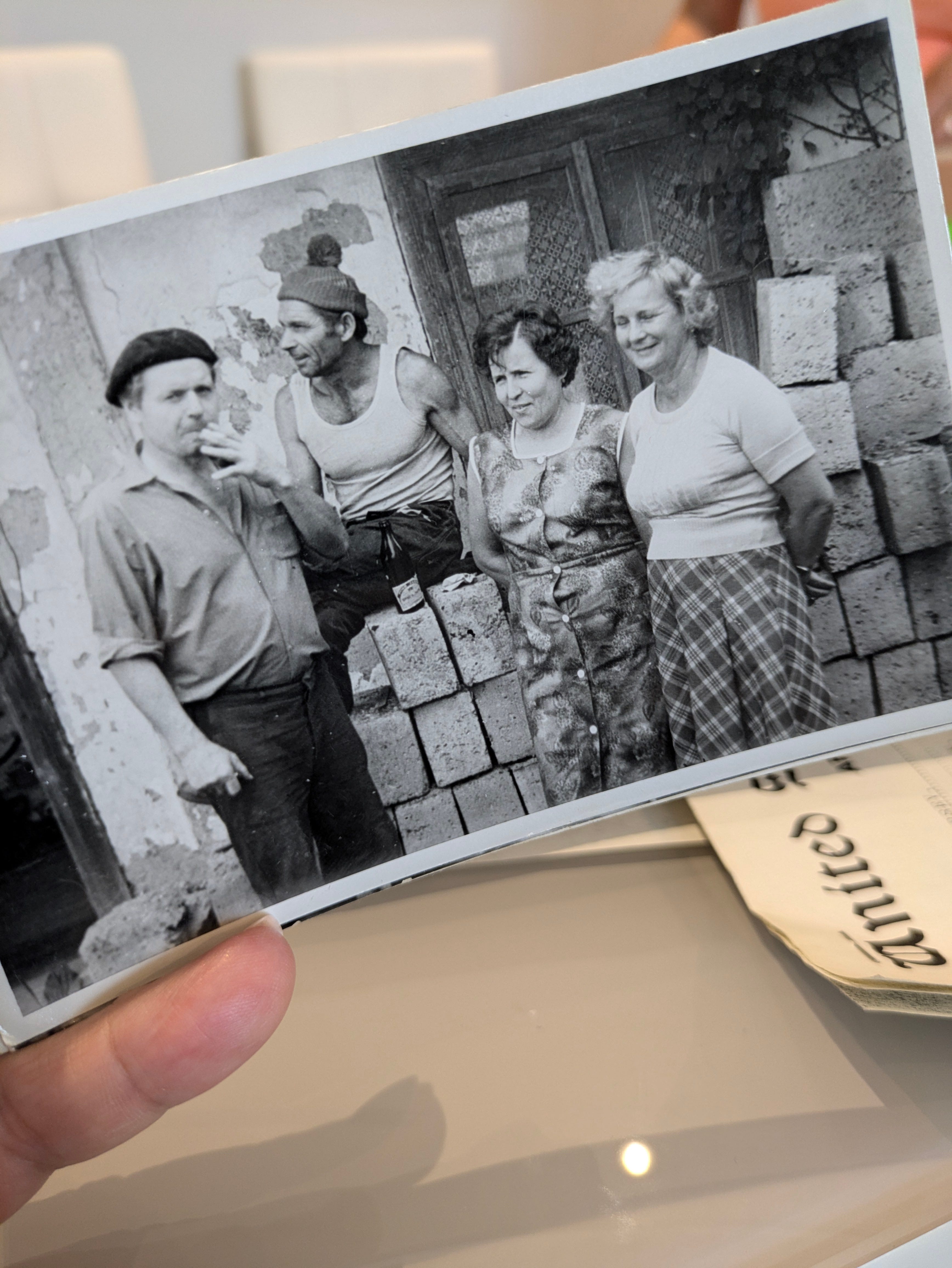
She didn’t speak about it because silence itself had once been a form of resistance. A way to endure, to protect, to keep going.
This explained her. And in some ways, it explained me too.
Deep Roots
Kopaliny. The village where my family’s deepest roots run. Where many are buried.
They lent me rubber boots so we could trek through the woods, past a field of cherry trees. And there it was.
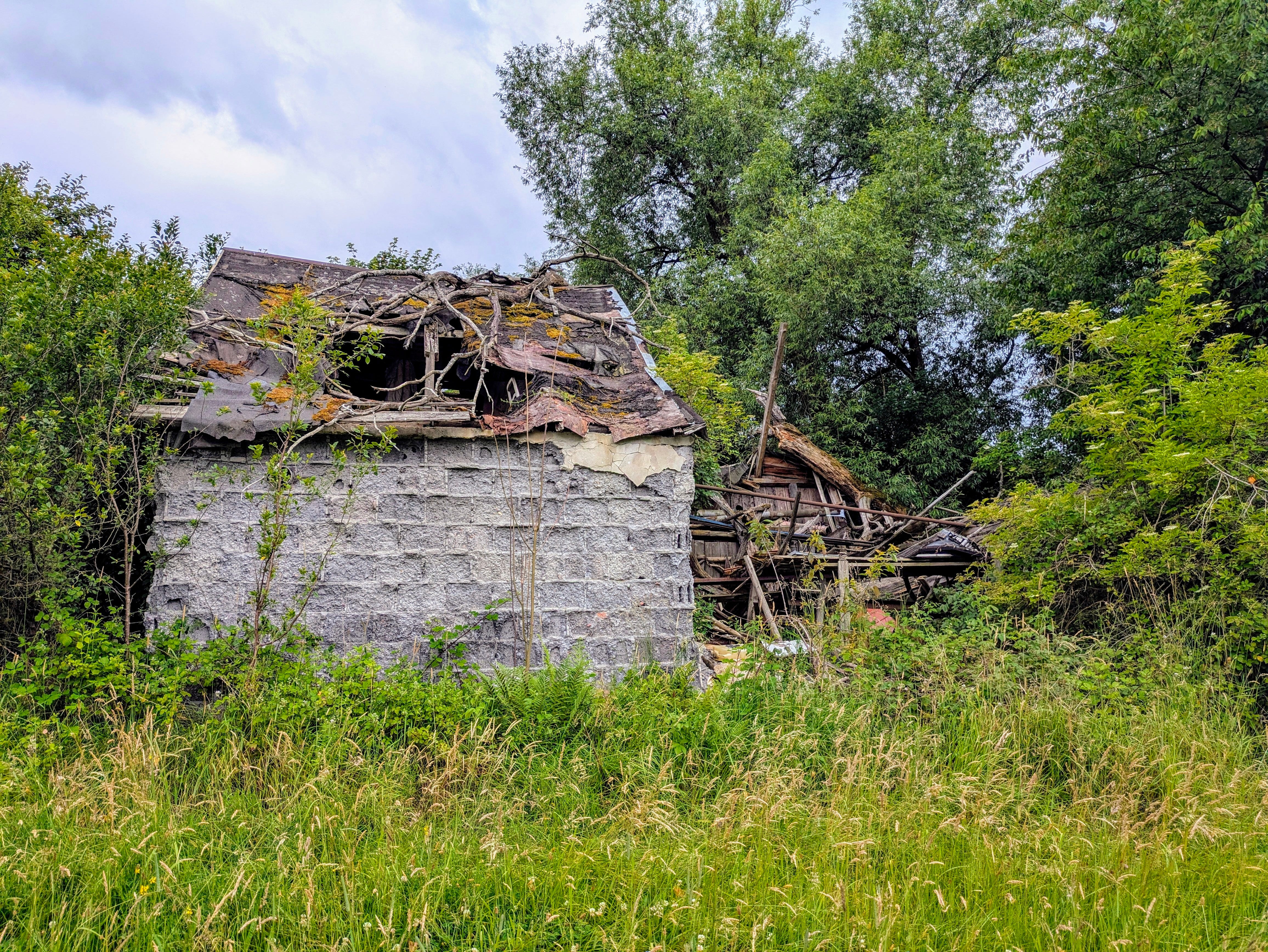
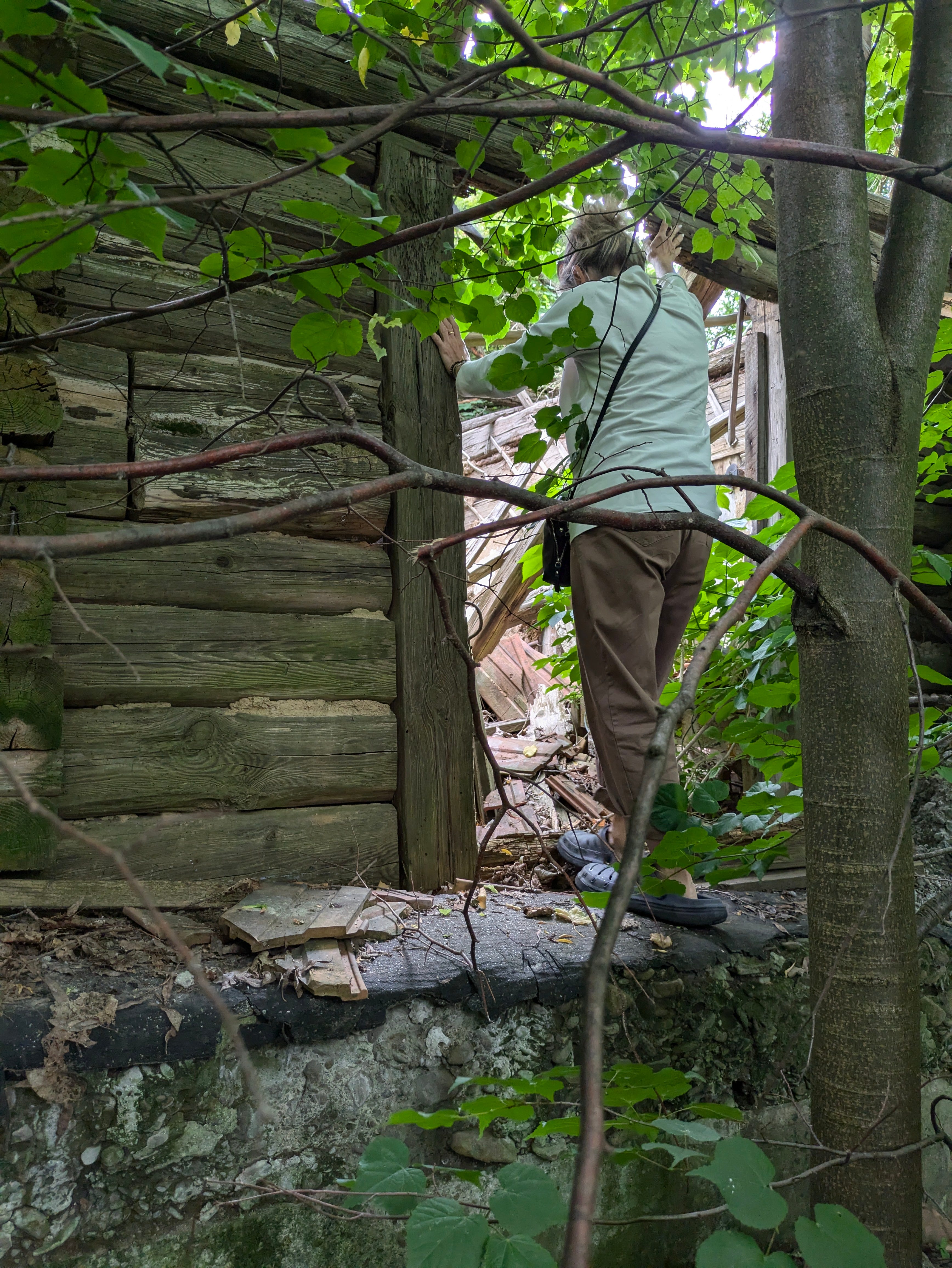
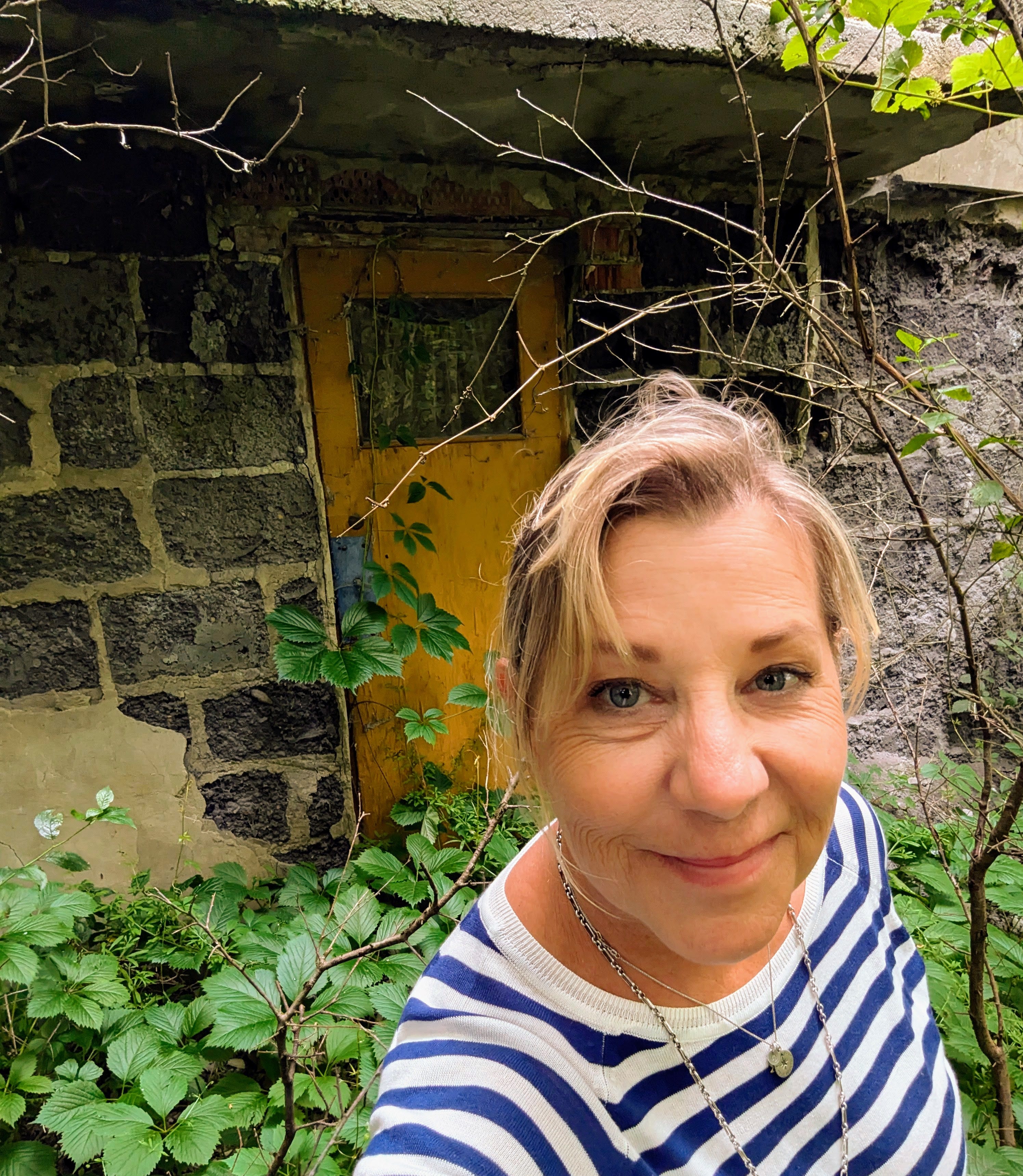
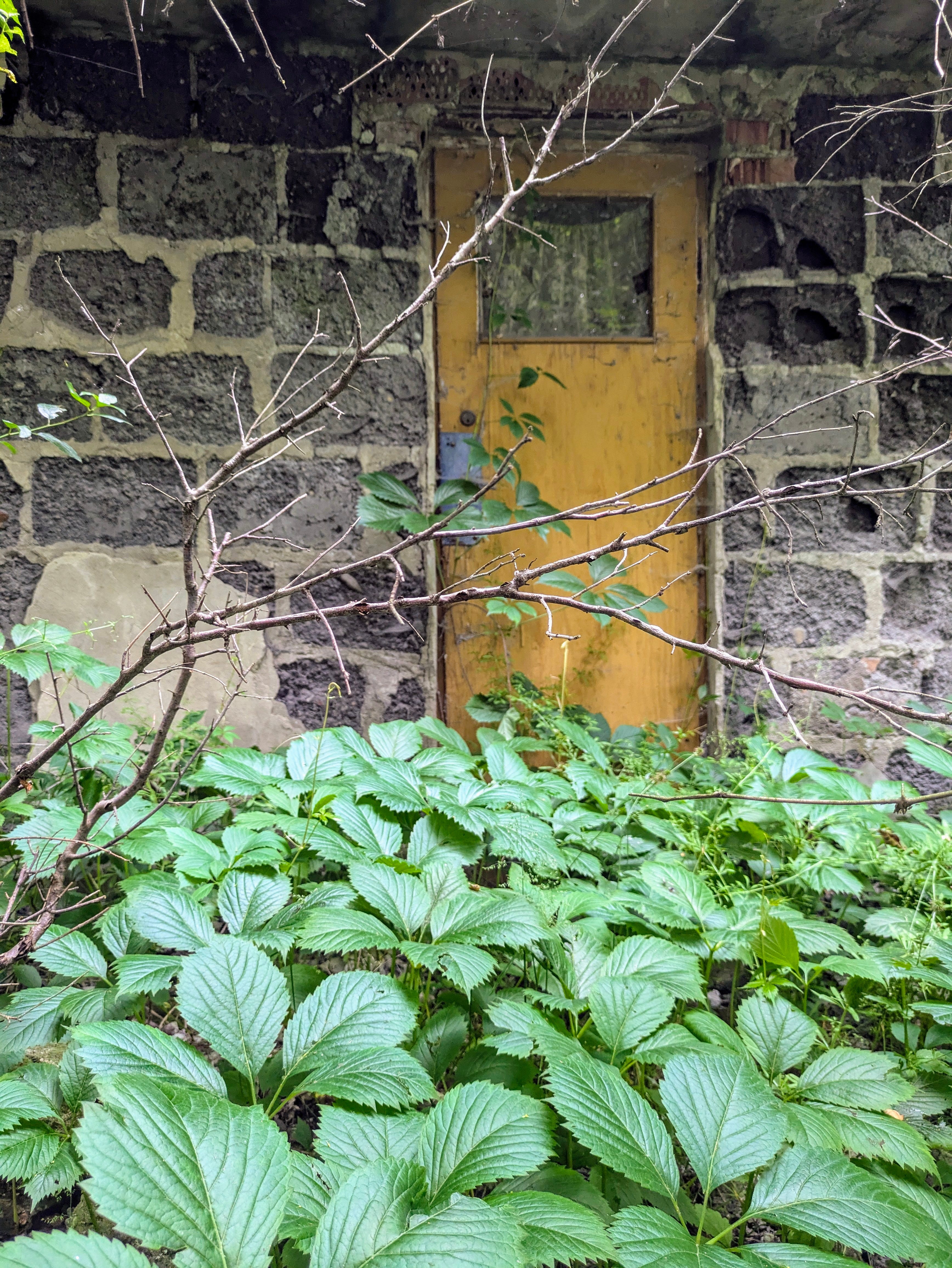
The wooden house where my second great-grandparents lived. Broken and barely standing. Nature had begun to reclaim it. Branches through the roof. Decaying wood slats leaning against each other. Strong vines clinging wherever they could. Time doing what it does.
But the door was still there. Intact. A faded yellow door with white curtains still hanging in the window.
For me, this wasn’t just a broken house. I was standing at the door my ancestors used every day. Carrying baskets of food in from the garden. Eggs. Wood for the fireplace. Standing there, my mind filled in the rest. Real images of the past.
What I Carried Home
How do you thank someone for showing you where you come from?
You carry it with you. You remember.
You tell the story.
Before I left Poland, I bought two amber amulets. One for me. One for my daughter.
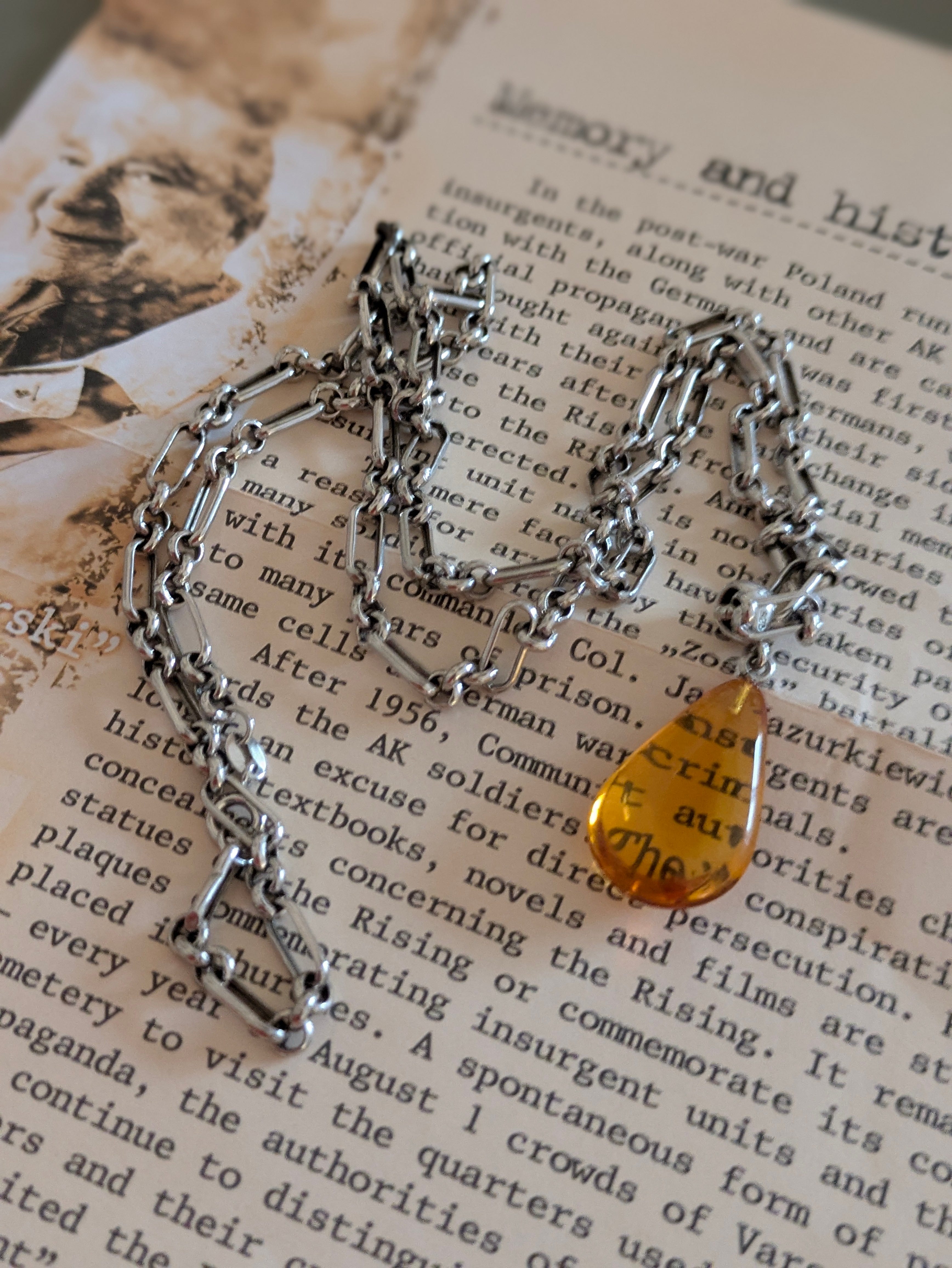
Amber is formed slowly, over time and under pressure. It protects what it holds. It is a fossil. It carries and preserves history. Like me now.
The door to my ancestors’ house was yellow.
So is amber.
Feels about right.
Beautiful
Wow Deb how awesome you are amazing 💕